Six Sigma Certifications
An official Six Sigma certification from MSI demonstrates that your knowledge has been independently verified and that you have the practical skills to drive measurable improvement. It also shows employers that you're proactive, self-motivated, and committed to continuous learning.
Every MSI Six Sigma program includes free self-paced training material and the official certification exam, allowing you to study on your own schedule and test when you're ready. Strengthen your résumé and take your career to the next level - Get MSI Certified™.

MSI Has Thousands Of Reviews!
2026 Six Sigma Certification Courses
Six Sigma Salary Impact Calculator
For example, a $60,000 salary with a Green Belt's typical 35% boost could rise to over $80,000. Based on the ASQ 2024 Salary Survey, professionals with Six Sigma training earn more, with greater premiums at higher belts. Backed by MSI's 4.8/5 TrustScore, this tool helps you visualize the career and financial benefits of Six Sigma certification.
Disclaimer: Figures are estimates and actual results may vary.
Six Sigma Industry Certifications
Six Sigma in Government
Six Sigma in Manufacturing
Why 2026 is the Perfect Time to Earn
a Six Sigma Certification Online.
Which Six Sigma Certification Should You Get?
For example, enrolling in the Six Sigma Black Belt Certification automatically covers the Yellow and Green Belt training content first, ensuring you build a strong foundation before advancing to more complex Black Belt topics. Earning an accredited Six Sigma Certification (CPD Provider #10042, BBB Accredited) demonstrates to employers that you possess proven skills in quality management and process improvement.
In today's competitive business environment, companies value employees who can optimize processes, reduce waste, and drive measurable results. MSI's Six Sigma Body of Knowledge is designed to meet these goals, making Six Sigma one of the most in-demand professional certifications across industries.
Top 10 Benefits of Earning a Six Sigma Certification
1. Enhance your professional credibility:
Earning a Six Sigma Certification demonstrates a high level of commitment to
professional excellence and continuous improvement. It shows employers and
clients that you possess the expertise to identify, analyze, and resolve
process inefficiencies using data-driven methodologies [1]. This certification
distinguishes you as someone who not only understands quality management
principles but can also apply them practically to optimize outcomes. As a
result, colleagues and stakeholders are more likely to trust your insights, and
organizations view you as a valuable asset capable of driving measurable
business improvements.
2. Unlock career advancement:
A Six Sigma Certification can serve as a powerful catalyst for career
progression by positioning you for leadership and management opportunities.
Professionals with this designation are often considered for roles such as
project manager, process improvement specialist, operations manager, or quality
assurance lead because they have proven their ability to deliver consistent
results. Companies value certified individuals for their capacity to lead
complex process improvement initiatives and achieve cost-saving results, often
rewarding them with promotions, higher salaries, and greater responsibilities
within the organization.
3. Gain transferable skills:
The analytical, problem-solving, and project management skills you acquire
through Six Sigma training are highly versatile and applicable across various
industries. Whether you work in healthcare, manufacturing, finance, IT, or
logistics, the ability to interpret data, design efficient workflows, and
systematically eliminate inefficiencies will remain relevant. These
transferable skills not only enhance your adaptability but also make you a
well-rounded professional capable of adding value in virtually any business
context, improving your employability and career flexibility.
4. Increase efficiency and reduce costs:
Six Sigma practitioners are trained to use structured methodologies such as
DMAIC (Define, Measure, Analyze, Improve, Control) to pinpoint inefficiencies
and waste in organizational processes. By identifying root causes of
variability and defects, certified professionals help streamline operations,
enhance product quality, and optimize resource utilization. This leads to
shorter production cycles, fewer errors, and significant cost savings-all of
which contribute to higher profitability and enhanced customer satisfaction
over time.
5. Strengthen problem-solving and decision-making:
Six Sigma empowers professionals to approach challenges with a logical,
structured, and evidence-based mindset [2]. Rather than relying on intuition or
assumptions, practitioners make decisions grounded in statistical analysis and
process data. This structured problem-solving approach ensures that solutions
are both effective and sustainable. Over time, this analytical discipline
enhances your ability to tackle complex business situations, assess risks
objectively, and make well-informed strategic decisions that deliver measurable
outcomes.
6. Develop a data-driven mindset:
A key component of Six Sigma is the emphasis on making decisions backed by
quantitative evidence. Through training, you learn to collect, interpret, and
apply data to identify performance gaps and guide process enhancements. This
data-driven mindset extends beyond process improvement-it becomes a strategic
asset that influences every aspect of business operations. Professionals who
think in terms of metrics and measurable outcomes bring greater clarity and
accountability to strategic planning, innovation, and execution.
7. Boost job security:
In an era where efficiency and continuous improvement are crucial,
professionals with Six Sigma Certification are indispensable to organizations
striving for operational excellence. Their ability to minimize waste, optimize
resources, and improve profitability makes them critical contributors to
long-term success. During periods of corporate restructuring or economic
uncertainty, their specialized expertise in cost reduction and performance
optimization often helps secure their positions, as they directly contribute to
organizational stability and competitiveness.
8. Meet employer requirements:
As more organizations adopt Six Sigma methodologies to remain competitive,
certification has become a standard qualification for various roles in quality
management, operations, and process improvement [3]. Many employers specifically
seek certified candidates who can lead efficiency initiatives and contribute to
measurable performance outcomes. Holding a Six Sigma credential demonstrates
that you meet or exceed these expectations, increasing your eligibility for
advanced roles and compliance with industry best practices.
9. Gain a competitive edge:
In today's crowded job market, a Six Sigma Certification sets you apart as a
candidate with both technical proficiency and strategic business acumen. It
signals to employers that you possess the ability to drive efficiency and
deliver tangible results. This globally recognized credential enhances your
professional profile, increases your attractiveness to recruiters, and provides
a distinct advantage over competitors who lack formal process improvement
training. As a result, you can command greater respect, influence, and earning
potential in your career.
10. Drive long-term success:
Implementing Six Sigma principles doesn't just deliver short-term
improvements-it fosters a culture of continuous enhancement, accountability,
and operational excellence. By systematically applying its methodologies,
organizations can sustain growth, boost customer satisfaction, and maintain
high-performance standards. Professionals trained in Six Sigma play a pivotal
role in driving these outcomes, ensuring that improvements are not one-time
events but part of an ongoing commitment to excellence that propels long-term
success.
Six Sigma Body of Knowledge
Six Sigma Yellow Belt BoK
Six Sigma Green Belt BoK
Six Sigma Black Belt BoK
Six Sigma Books by MSI
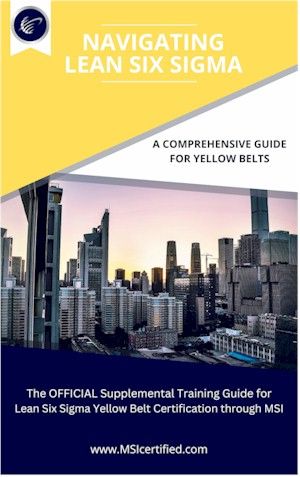
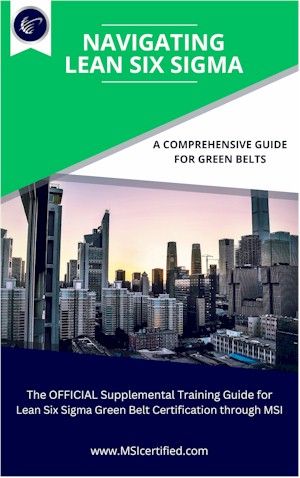
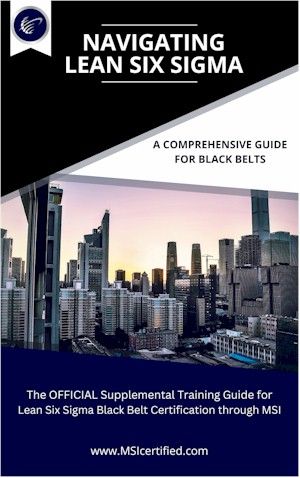
The MSI Navigating Lean Six Sigma books are the official Six Sigma reference guides of the Management and Strategy Institute, designed to help learners and professionals master the principles of process improvement. Perfect for anyone beginning their Six Sigma journey or seasoned practitioners who are already certified, these books provide clear explanations, real-world examples, and practical insights that make complex concepts easy to understand. Whether you're studying for Six Sigma certification or simply want a reliable physical resource to keep your knowledge sharp, the Navigating Lean Six Sigma series offers a comprehensive and convenient way to stay connected to the core methodologies of Six Sigma.
Six Sigma Yellow Belt
Available on Amazon Here
Six Sigma Green Belt
Available on Amazon Here
Six Sigma Black Belt
Available on Amazon Here
Free eBooks
Six Sigma for Beginners
Streamlining Your Success
References
MSIcertified.com